
As traditional assets such as stocks, bonds, and real estate continue to enter the tokenization process, some financial products in the real-world asset (RWA) sector have yet to be included in this trend, with catastrophe bonds being one of them.
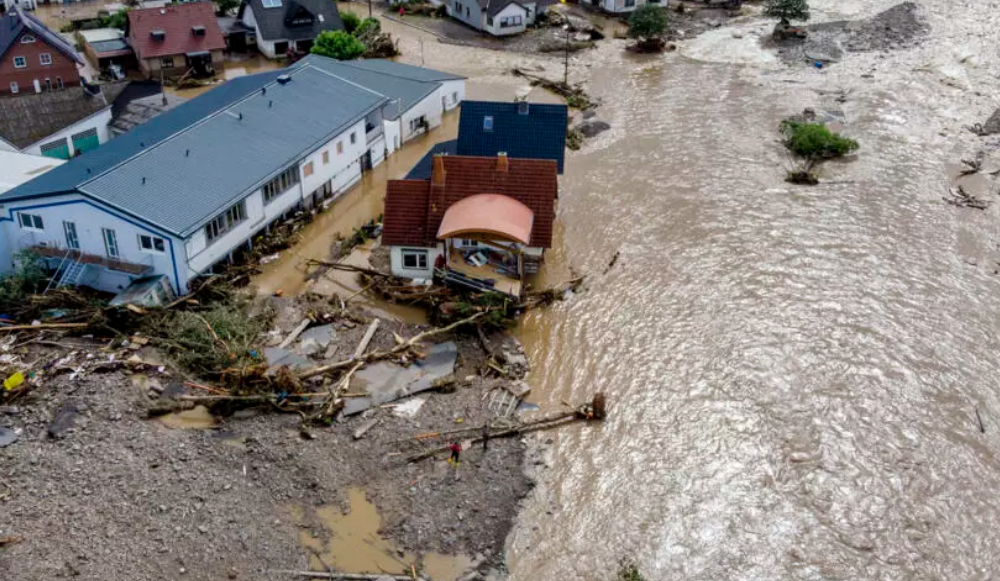
Catastrophe bonds are a special type of insurance product, mainly used to provide payouts when major disasters such as hurricanes and earthquakes occur and reach agreed conditions. Now, these products may also be further introduced into blockchain systems, promoting the on-chain implementation of their ownership and related processes.
Harneys, a law firm focused on legal advice for alternative risk transfer products, including catastrophe bonds, and Bermuda-based tokenization platform droppRWA, are advancing a related plan. The project aims to assist Saudi Arabia in advancing the tokenization of its economy and plans to issue what it calls the first catastrophe bonds, with bond ownership directly recorded on the blockchain and the first transaction expected to be completed in early 2027.
Currently, tokens of many tokenized assets actually represent assets whose ownership is established within traditional off-chain structures, such as relevant interests held by a holding company. This means that although tokens can be transferred quickly, the corresponding legal ownership behind them still points to an off-chain third party rather than the asset itself.
The planned catastrophe bonds, however, seek to adopt a different legal structure.
Henry Tucker, partner and global head of trusts and private wealth at Harneys, said in an interview that under the relevant companies’ structure in Bermuda, the token is not merely a digital certificate pointing to bonds held elsewhere, and investors will directly own the legal ownership of the bonds.
Faisal Monai, CEO and co-founder of droppRWA, told CoinDesk that the importance of this arrangement is that investor registration, eligibility screening, and payment processes will all be placed within the same legally binding system, rather than continuing to operate in parallel with off-chain ownership records.
If the system ultimately receives the necessary regulatory approvals, the relevant system is expected to shorten reconciliation processes that traditionally take several days to just seconds.
At the same time, financial institutions are gradually extending blockchain applications from traditional asset tokenization to asset issuance, ownership records, and settlement. Data from RWA.xyz shows that the tokenized asset market has nearly tripled in size over the past year and currently exceeds $33 billion; Citibank estimates that the industry could reach $5.5 trillion by 2030.
In terms of market size, catastrophe bonds have already formed a market worth $65.6 billion. Insurance companies, reinsurers, and government agencies use this market to transfer part of their natural disaster risks to capital market investors.
Investors in catastrophe bonds can generally receive coupon income, with returns generally consisting of floating money market returns generated by collateral and a risk spread. However, once an agreed triggering event occurs, investors are required to bear the corresponding payout amount.
An important attraction of these products is that their returns are not directly dependent on financial market trends, economic cycles, or political events.
Edwin Mata, CEO and co-founder of asset tokenization company Brickken, said that putting catastrophe bonds on the blockchain itself is not the core issue. What is truly important is whether the blockchain can become the formal record of legal ownership. If the blockchain records the legal ownership itself, then when the token is transferred, legal ownership will also be transferred; otherwise, the token is merely transferring a digital version corresponding to an off-chain asset.
Mata also pointed out that tokenization itself will not change catastrophe risks, triggering mechanisms, collateral quality, or bond valuation, nor will it automatically create liquidity for the market.
In his view, the key to truly validating this model will be an actual issuance involving institutional investors, legally effective final settlement, and a secondary market that can operate normally in a real-world environment.
The catastrophe bond market has also maintained a high level of issuance activity recently. The second quarter of 2026 became the quarter with the largest issuance volume in the market, with 48 transactions completed and total issuance reaching $11.3 billion.
In terms of trading venues, the Bermuda Stock Exchange hosted 93% of global catastrophe bond issuance in 2025. As of the end of the second quarter of 2026, the total value of catastrophe bonds and insurance-linked securities listed on the exchange had reached $70.5 billion.
In addition to directly placing bond ownership on-chain, the project is also considering expanding participation by lowering the investment threshold.
Under another proposed structure, investors would not need to directly purchase catastrophe bond notes, as such notes usually require a minimum denomination of $250,000 or more. Instead, they would purchase interests in an instrument that holds the bond and passes the relevant returns to investors. This model is similar to some relatively mature tokenization projects and could potentially reduce the minimum investment amount to $5,000.
Currently, the project still needs to meet applicable regulatory requirements and obtain relevant approvals. At the same time, any entity undertaking the role of platform administrator must obtain the corresponding license under Bermuda’s Digital Asset Business Act 2018.
If the first issuance can be launched as planned in 2027, the project will become a practical test of bringing catastrophe bonds on-chain, focusing on whether the legal, settlement, and auditing infrastructure supporting the operation of this market can function in a blockchain environment.