
The transition to Web3 is not just a technological upgrade; it is a fundamental shift in how value is created, distributed, and captured. Traditional Web2 business models, built on centralized data and advertising revenue, are being challenged by decentralized alternatives that prioritize user ownership and community governance. For entrepreneurs, investors, and creators in Vietnam, understanding how to build a successful Web3 business model is the key to unlocking immense innovation and financial opportunity.
This guide provides a comprehensive roadmap for designing, launching, and scaling a successful business model in the Web3 ecosystem. We will break down the core components of Web3 value creation, explore actionable strategies for monetization, and analyze real-world case studies. Whether you are a crypto beginner or a seasoned investor, this framework will equip you with the knowledge to build the next generation of decentralized ventures.
What is a Web3 Business Model?
A Web3 business model defines how an organization creates and captures value within a decentralized ecosystem. Unlike traditional models that rely on intermediaries and data monetization, Web3 models are built on principles of tokenization, community ownership, and direct peer-to-peer interactions. The value is generated not by controlling user data, but by facilitating a robust and engaged economy around a protocol or application.
Key characteristics that distinguish a Web3 business model include:
- Tokenization: Using cryptographic tokens (fungible or non-fungible) to represent ownership, access, or utility within a network.
- Decentralization: Distributing control and governance among users and stakeholders, rather than concentrating it within a single entity.
- Community Ownership: Aligning the incentives of developers, users, and investors so that everyone benefits from the network's growth.
- Transparency: Operating on public blockchains where transactions and protocol rules are verifiable by anyone.
For innovators in Vietnam, embracing these principles is not just a strategic choice—it is a necessity for building sustainable and competitive ventures in the new digital economy.
Step 1: Identify a Problem and Define Your Value Proposition
Every successful business, Web2 or Web3, starts by solving a real problem for a specific audience. Before you even think about tokens or blockchains, you must identify a clear pain point and articulate how your project will address it in a unique and compelling way.
Find Your Niche
The Web3 space is vast. To stand out, focus on a specific niche where decentralization can offer a tangible improvement over existing solutions. Ask yourself:
- Can a decentralized approach remove unnecessary middlemen and reduce costs? (e.g., DeFi lending)
- Can tokenization create new forms of ownership and creative economies? (e.g., NFTs for art and music)
- Can community governance lead to more equitable and user-aligned platforms? (e.g., decentralized social media)
- Can blockchain provide greater transparency and security for a specific process? (e.g., supply chain tracking)
A Web3 business model for crypto beginners might start with a simple dApp that solves a common problem, while a more ambitious project could aim to build entirely new infrastructure.
Articulate Your Value Proposition
Your value proposition is a clear statement that explains the benefit you provide, who you provide it to, and how you do it uniquely. For a Web3 project, this statement should emphasize the advantages of decentralization.
Case Study: Uniswap's Value Proposition
- Problem: Centralized exchanges are slow, require users to give up custody of their funds, and have limited token listings.
- Solution: Uniswap, a decentralized exchange (DEX), allows users to trade any ERC-20 token directly from their wallets.
- Value Proposition: "Swap, earn, and build on the leading decentralized crypto trading protocol." This is powerful because it highlights the core functions (swap), the financial incentive (earn), and the open nature of the platform (build) without needing a central authority.
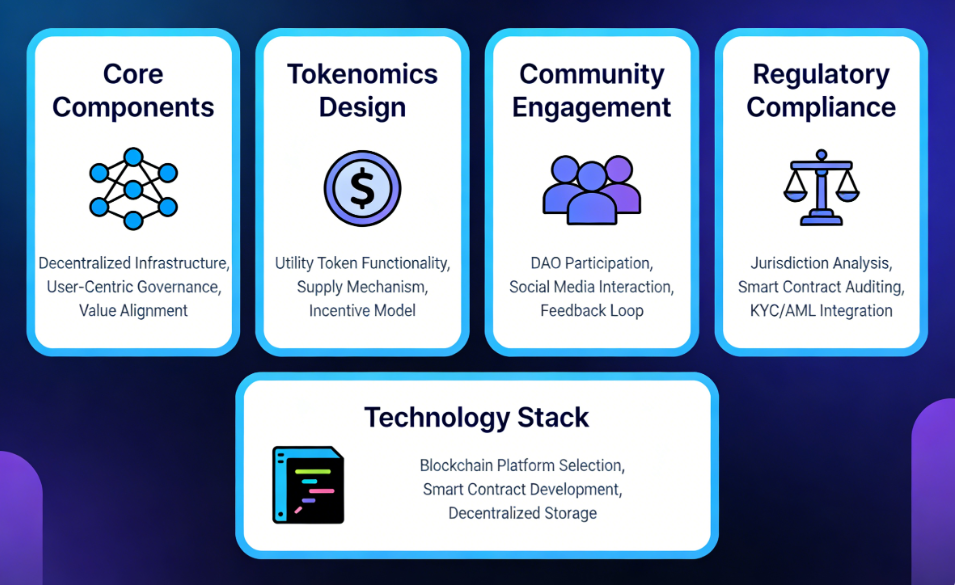
Step 2: Design Your Tokenomics Model
Tokenomics—the economics of your token—is the heart of your Web3 business model. A well-designed token is not just a fundraising mechanism; it is a tool for incentivizing desired behaviors, governing the protocol, and capturing a portion of the value created.
Determine the Token's Utility
What does your token do? The utility of the token must be integral to the functioning of your platform. Common token utilities include:
- Governance: The right to vote on proposals that affect the future of the protocol. This gives the community a direct stake in the project's success.
- Staking/Security: The ability to stake tokens to help secure the network in exchange for rewards. This is common in Proof-of-Stake blockchains.
- Access: The token may be required to access certain features or services within the platform.
- Medium of Exchange: The token can be used as the native currency for transactions within your ecosystem.
Define Token Distribution and Supply
This is a critical part of your model. You need to decide:
- Total Supply: Will your token have a fixed supply (like Bitcoin) or an inflationary model? A fixed supply can create scarcity and drive value, while a controlled inflationary model can be used to fund ongoing development and security.
- Initial Distribution: How will the tokens be allocated at launch? A typical allocation might look something like this:
- Community/Ecosystem Fund: A large portion dedicated to rewarding users, developers, and liquidity providers.
- Team and Advisors: A vested allocation for the core contributors.
- Investors: Allocations for early backers.
- Public Sale/Airdrop: Distributing tokens to the broader community.
Transparency in token distribution is crucial for building trust. Projects with a large, unvested allocation for the team and investors are often seen as high-risk. For investors looking to analyze new projects, platforms like HIBT provide essential market data and access to a wide variety of tokens, allowing for informed decisions based on tokenomic fundamentals.
Step 3: Choose Your Revenue and Value Capture Mechanism
While Web3 is about decentralization, sustainable projects still need a way to generate revenue or capture value to fund ongoing operations and reward stakeholders. This mechanism must be carefully designed to align with the decentralized ethos of your project.
Protocol Fees
This is the most common revenue model in Web3. The protocol charges a small fee for transactions that occur on the platform. The key question is what happens to these fees.
- Fee Burn: A portion of the fees can be "burned" (permanently removed from circulation). This is a deflationary mechanism that can increase the value of the remaining tokens.
- Distribution to Token Holders/Stakers: Fees can be distributed to users who hold or stake the protocol's governance token. This creates a direct incentive to own the token.
- Treasury Accrual: Fees can be sent to a community-controlled treasury (a DAO) to fund future development, grants, and other ecosystem initiatives.
Case Study: Ethereum's Fee Model
Ethereum's EIP-1559 update introduced a sophisticated fee model. Every transaction has a "base fee" that is burned, reducing the overall supply of ETH. Users can also add a "priority fee" (or tip) to miners/validators to have their transaction processed faster. This model creates a deflationary pressure on ETH, directly linking network usage to the value of the underlying asset. This is a core part of the Web3 business model for the entire Ethereum ecosystem.
Other Monetization Strategies
- Subscription Models: Some dApps offer premium features for a recurring fee, often paid in the native token or a stablecoin.
- Marketplace Fees: NFT marketplaces typically take a small percentage of each secondary sale.
- Providing Value-Added Services: A company can build a profitable business by providing services on top of an open-source, decentralized protocol (e.g., analytics dashboards, institutional-grade security).
For entrepreneurs looking at how to create a Web3 business in Vietnam, analyzing the revenue models of successful existing projects is a crucial step in the planning process.
Step 4: Build a Strong Community and Foster a Network Effect
In Web3, your community is not just your customer base; they are your co-owners, marketers, and governors. A strong, engaged community is the most powerful moat a Web3 project can have. Building this community from day one is essential.
Community Engagement Strategies
- Be Active and Transparent: Maintain open lines of communication through channels like Discord, Telegram, and Twitter. Provide regular updates on development progress.
- Incentivize Early Adopters: Use airdrops and other reward mechanisms to attract and retain early users. These initial community members are often your most passionate advocates.
- Empower Contributors: Create clear pathways for community members to contribute, whether through development, content creation, or community management. A DAO structure can formalize this process.
- Focus on Education: The Web3 space can be intimidating. Provide clear documentation, tutorials, and support to help new users navigate your platform.
A powerful network effect occurs when the value of a platform increases as more users join. For an exchange, this means more liquidity; for a social platform, it means more content and connections. Your entire business model should be designed to kickstart and sustain this flywheel of growth.
Executing trades and participating in these emerging ecosystems requires a reliable platform. With its secure infrastructure and user-friendly interface, HIBT serves as a trusted gateway for Vietnamese users to engage with a wide array of Web3 projects and their communities.
Step 5: Prioritize Security and Plan for Scalability
Security is not a feature; it is a prerequisite for survival in Web3. A single smart contract vulnerability can destroy a project overnight. Your business model must account for the significant costs and resources required for robust security.
A Multi-Layered Security Approach
- Smart Contract Audits: Before deploying, your code must be audited by multiple reputable third-party security firms. This is non-negotiable.
- Bug Bounties: Offer substantial financial rewards to white-hat hackers who discover and responsibly disclose vulnerabilities in your code.
- Ongoing Monitoring: Implement real-time monitoring and alert systems to detect suspicious activity.
- Decentralized Insurance: Explore protocols that offer insurance against smart contract exploits.
Plan for Scalability
As your platform grows, transaction costs and speeds can become a major bottleneck, particularly on congested networks like Ethereum. Your long-term strategy must address scalability. This could involve:
- Building on a more scalable Layer 1 blockchain.
- Deploying on a Layer 2 scaling solution like Polygon or Arbitrum.
- Designing your application to be as efficient as possible to minimize gas costs.
For investors, Web3 strategies for investors should always include an assessment of a project's security posture and scalability plan. A project that ignores these fundamentals is a high-risk investment, regardless of its hype. A secure exchange like HIBT, which prioritizes asset protection, reflects the kind of security-first mindset that is essential for success in this space.
Conclusion
Building a successful business model in Web3 is a complex but incredibly rewarding endeavor. It requires a shift in mindset from centralized control to community empowerment, from data exploitation to value co-creation. By focusing on solving a real problem, designing elegant tokenomics, fostering a vibrant community, and prioritizing security, you can build a sustainable and impactful venture.
The decentralized future is being built today, and the opportunities for innovation are boundless. For the next generation of builders and investors in Vietnam, the time to start learning and building is now. With the right strategy and a commitment to the core principles of Web3, you can play a pivotal role in shaping this new digital frontier with a trusted partner like HIBT.
About the Author
Dr. Lan Nguyen is a renowned expert in distributed computing and economic game theory. She has published over 80 academic papers on consensus algorithms and decentralized governance models. Dr. Nguyen has been the lead auditor for some of the most prominent Layer 1 and DeFi projects in the crypto space, ensuring the economic and technical security of ecosystems managing billions of dollars in assets. She is a passionate advocate for financial inclusion and dedicates her time to educating the public on the transformative potential of Web3.